[OutRun Novel, Episode 6] A Heart Running Slightly Behind the Clock
A Heart Running Slightly Behind the Clock
Even without a second hand, the first thing to disappear was always the sound.
Each time the remaining time on one side of the dashboard shaved itself down, the music inside the car seemed to come through more clearly. A few short, bright notes tapped at the windshield first, then a lower rhythm rose up beneath them. As they crested the hill, light spilled over everything at once. The shadow that had been pressing down on them a moment ago slid away behind, and the road looked as if it had suddenly widened. But that was mostly a trick of the scenery. What had really opened up was the sky. On the pavement ahead, the same slow cars still strung themselves out in broken intervals.
At the top, the red car went light for an instant, almost floating, and then immediately gathered the speed of the downhill. Wind swept long across the windshield. The woman in the passenger seat pressed her hair down with the back of her hand. On the climb she had kept her lips shut and stared straight ahead; only once they started descending did she finally let out a breath.
“Did we make some time?”
He didn’t answer. He just glanced at the instruments. The numbers hadn’t improved so much as stopped getting worse. Right now, that tiny distinction meant everything.
“Or,” the woman said, “does it just look that way?”
Instead of laughing, he nudged the wheel a fraction. The line he’d been tracing behind the car ahead slipped gently aside. A headlight from the oncoming lane flashed at the edge of daylight. Not yet. He tucked back in. The engine note stretched out, held tight and low.
The scenery on either side was changing again. The rough rock and dry grass from the hilltop gave way below to neatly spaced trees. Their branch tips shook in the wind, but their trunks didn’t move. Far off, a bright strip of water appeared now and then. Sea or river, it was hard to tell—just a blue sheen with no clear boundary. The road seemed to be heading for it, then turned away at the last moment, wasting time. The closer the destination got, the less honest the road became.
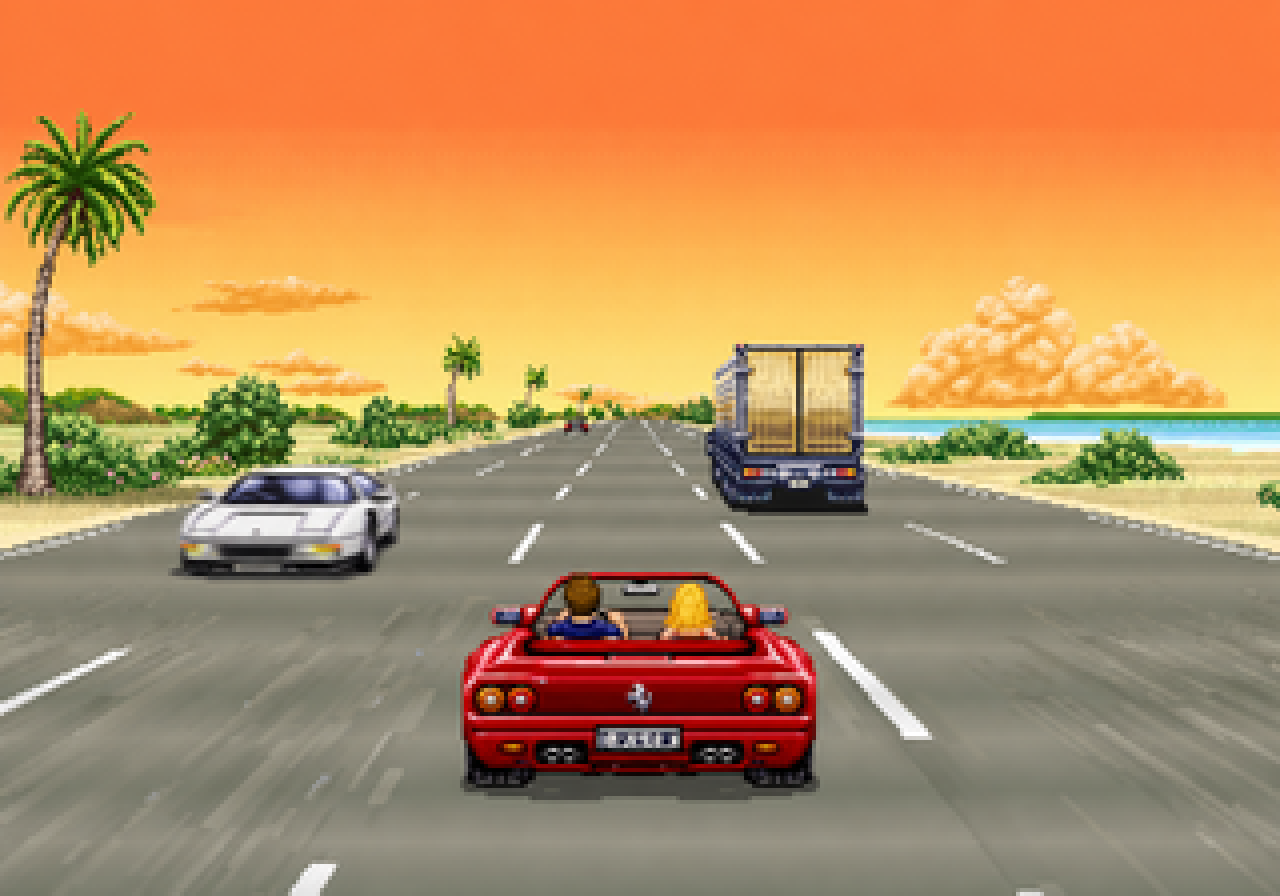
Ahead were a small sedan and a truck loaded with cargo. The gap between them wasn’t wide, and in the opposite lane a silver car was coming on with slow, unquestioning certainty. He pressed the accelerator, then eased off again. The woman beside him felt the decision before it happened. Her toes braced once against the floor. Her hand searched along the top of the door.
“Not now, right?”
“Not yet.”
“‘Not yet’ never lasts very long.”
Instead of answering, he watched the back of the truck. Sunlight caught on a metal edge and kicked away in a brief spark. The shadow under the cargo bed trembled across the road. The silver car passed, and behind it a stretch of empty lane opened for a moment. He held his breath as if measuring that instant. The rhythm of the music landed right on top of it. One drum hit, the melody leapt upward, and the red car crossed the line.
As he skimmed alongside the truck, the whole world suddenly closed in. Tire noise, wind noise, the engine’s vibration, the narrow distance where metal seemed aware of other metal. The woman in the passenger seat said nothing. She kept staring forward, as if one word too early might make the car sway after it. The moment he cleared the truck’s nose, he folded the wheel inward again. As soon as the red car slipped back into its lane, a white car rushed past from the opposite direction, low and fast. Wind slapped the bodywork.
Only then did she breathe out.
“A second ago you said not yet.”
“A second ago, it wasn’t.”
“That sentence is the dangerous part.”
He smiled, but only for an instant. The car was already running up behind the next vehicle. The little bit of space he’d made was being swallowed almost immediately by the other speeds on the road. The downhill still hadn’t ended, and time hadn’t stopped either. The remaining numbers kept shrinking. There was something strange about the way they did it. From far away, they always looked plentiful; up close, they vanished all at once. Destinations were usually like that. They acted as if they didn’t exist until they came into view, and the moment they did, they started pressing you.
The music looped back to a familiar phrase. It should have felt routine by now, but somehow this time it sounded like he was hearing it for the first time. Same melody, same instruments—yet the meaning had changed because the backdrop had changed. On the coast, it had sounded like the road opening ahead. In the white town, it had sounded like slipping between walls. Here, it no longer sounded like music carrying them toward somewhere. It sounded like something holding them back from getting there too quickly.
The woman looked out the window.
“Look.”
Without taking his eyes off the road, he asked, “At what?”
“Not the road.”
Only then did he glance sideways. Between the trees, the water opened wide. Light skimmed thinly over the surface, and a few small white specks floated there. Boats, maybe. Or just sunlight playing tricks. It was hard to tell. But distant things were always a little beautiful.
Because you couldn’t get close to them.
“Nice,” he said.
“You really can just say ‘nice’ and drive past it.”
“If I don’t drive past it, we’re late.”
“That’s always what you say.”
Even so, she couldn’t pull her gaze away. The car kept moving, and the scenery never waited for anyone looking at it. Some views stay with you longer when you can’t quite hold them. She probably knew that. So did he. That was why they could be looking at the same thing and still choose differently. One chose what she wanted to keep looking at. The other chose what he couldn’t afford to miss.
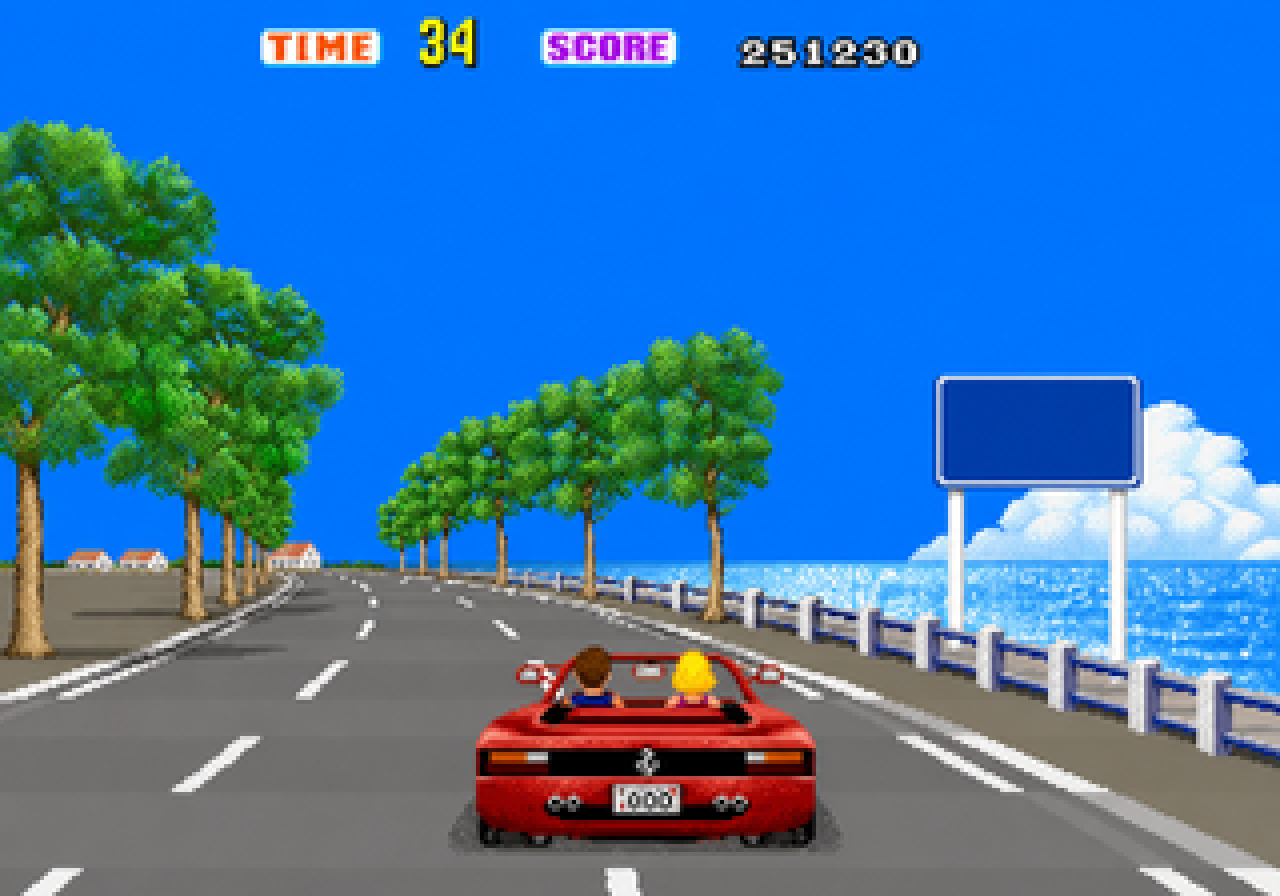
Ahead, a blue sign appeared, small at first. The words weren’t readable yet, but the shape alone was enough. For anyone measuring the road by what remained, a blue sign always carried promise and threat together. The closer it got, the less reassuring it felt. You only had to make it that far. If you couldn’t even make it that far, it was over. Both thoughts entered the car at once.
He pressed the accelerator a little harder. The engine rose from somewhere low and filled the cabin. The woman turned to look at him.
“Again?”
“This time I have to.”
“If all you ever do is what you have to, sometimes there’s nothing left when you finally arrive.”
It didn’t sound like a jab. If anything, it sounded like someone saying aloud something she’d been thinking for a long time. He didn’t answer right away. He watched the movement of the car ahead and waited for the next opening. But her words didn’t pass through the car like wind. They stayed.
Sometimes there’s nothing left when you finally arrive.
He understood what she meant. On the road there was always a next section, a next sign, a next view. Some things ended the instant you reached them. A destination gained a name, but in exchange it took away a lot of what the road had been holding. That was why some people wanted to arrive, and some wanted not to arrive quite so completely. It was only the slightest difference, but it was enough for time to move differently even inside the same car.
The car ahead drifted a little to the right. The small sedan behind the truck was hesitating. He didn’t miss that movement. Before a gap opens on the road, there’s a moment when a gap opens in someone’s mind. He had spent a long time learning to recognize it. The red car slipped outward again.
This one lasted longer. To clear both the small car and the truck in one move, he had to hold the speed. The opposing lane was empty, but far off there was a dot. Those dots always grew faster than you thought they would. This time the woman didn’t grab the handle. Instead, she clasped her hands tightly in her lap. By now she knew in her body the difference between when he could make it back in and when he couldn’t. That made it worse in a different way. Reckless danger passed quickly. Calculated danger stayed with you.
The truck’s side stretched on and on. The red car’s shadow clung to the metal, then fell away. The dot ahead was beginning to take the shape of a car. He still didn’t move back in. He had to go farther. As he cleared the truck’s front, the road ahead tipped downward once. At the end of that slope, the blue sign looked much larger. And beneath it, the road was already beginning to hint at a split left and right. The junction was still some distance away, but the road had already taken on the shape of a choice.
Only then did he come back inside. The oncoming car swept past and rocked the body. The woman shut her eyes, opened them again, and said,
“That one was too long.”
“I know.”
“You know, and you still do it.”
“If I don’t, we lose more time.”
She fell silent. It was the silence of admitting he wasn’t wrong. But just because something was true didn’t mean the heart went along with it. She looked back out the window. The water between the trees was almost gone now. In its place ran a roadside guardrail, and beyond it a few low roofs appeared in the distance. It should have meant ordinary life, someone living somewhere. Instead it only made the scene lonelier. To someone passing through, even rooftops were just another color for a second.
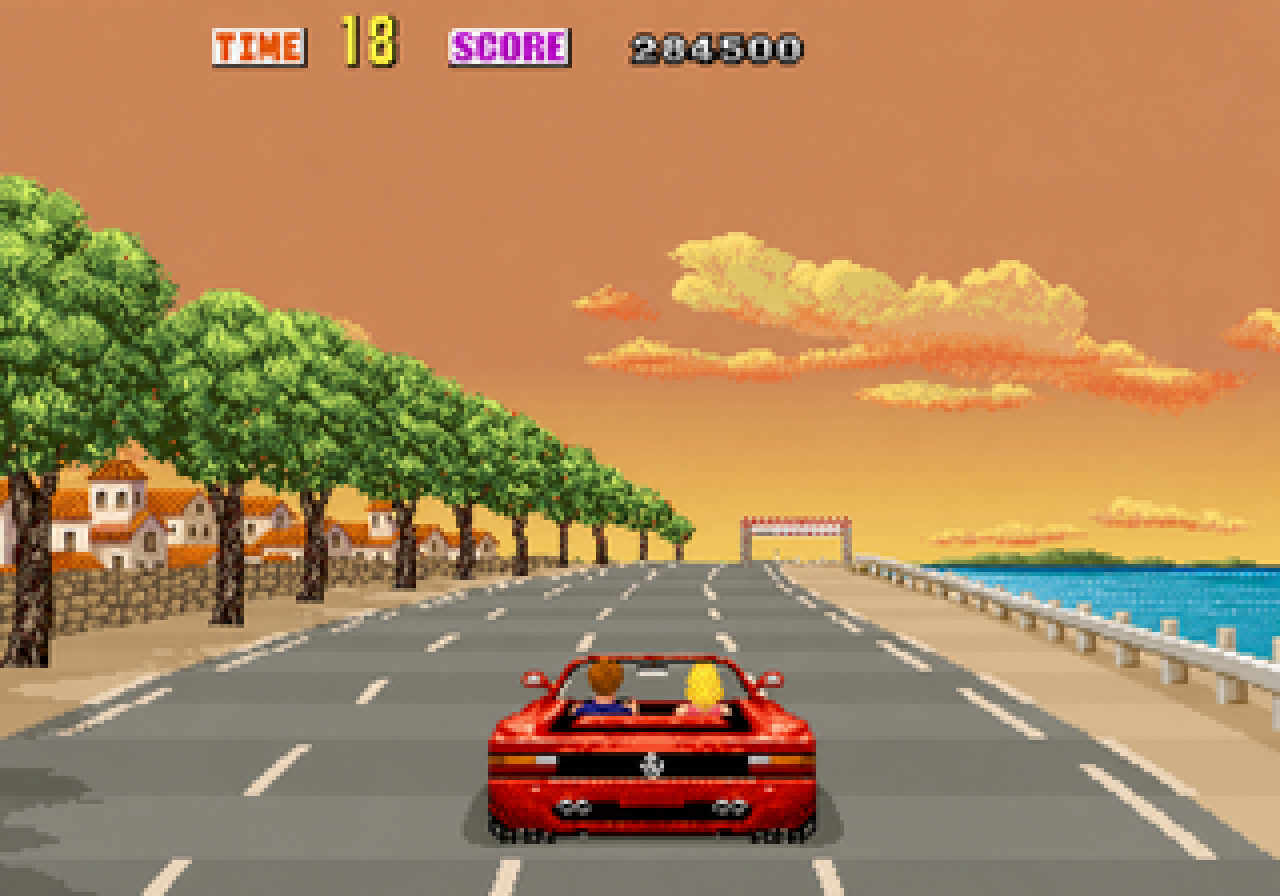
The music moved into its refrain. The melody, so light on the surface, now sounded faintly wistful. She glanced at the dashboard. There was still time left, but not enough to call generous. He kept his eyes forward like someone refusing to look at the numbers. There were moments when looking at them too often made your resolve shrink first.
“Hey,” she said.
“Yeah.”
“Can’t we go just a little slower?”
He didn’t pretend not to hear. He just didn’t answer at once. The road ahead was briefly empty, and that emptiness made the question ring more clearly. Slower. It was a simple word, but on this road it sounded almost impossible. It was hardly different from asking him to give up the clock. And yet there was no childish insistence in her voice. She was simply asking whether, just this once, it might be possible.
“Why?”
“I don’t know,” she said. “Today I keep feeling like it’s a shame to arrive too soon.”
Only then did he look at her. It was just a glance, but a great deal passed through it: the light on the coast, the shadows on the white walls, the shade on the hill, the flash of water they had just passed. Up to now all of it had been just the in-between on the way to somewhere else. For her, it had already become most of the day. What felt precious was always what had already gone by.
He turned back to the road. The blue sign was growing larger. The letters were starting to come into focus, and beneath them the distance had begun to feel countable. The last stretch before a checkpoint usually looked shortest and felt longest. The road always acted as if it were about to end, then tested you one last time.
“If we slow down,” he said, “we might not make it.”
“I know.”
“Then?”
“I still wanted to ask.”
Instead of answering, he held the speed where it was. He didn’t press harder, didn’t let off. That ambiguous choice was almost everything he had to give. A pace that didn’t surrender completely to time, but didn’t hand the whole road over either. But that kind of speed never lasted. Another car appeared ahead, and the remaining time once again showed its face as a number.
The road curved long beneath the sign. Beyond the outside edge was a low guardrail and light dropping away below it. He tapped the brake once and released it immediately. The car followed the line with a slight shiver. The woman leaned toward the door and then came back upright. As they came out of the corner, the checkpoint structure appeared in the distance. A simple gate spanning the road. Once they passed under it, time would be given back, at least for a while. But because of that very fact, her words grew sharper in his mind. It’s a shame to arrive.
Most people would have felt relief at the sight of the checkpoint. What he felt instead was a strange reluctance. The first thing he thought was that this section was ending. A moment ago there hadn’t been enough time; now he was thinking about all the things that had been good precisely because there wasn’t enough of it. Not being able to look at the sea longer. Not being able to drift slowly through the shadows of the white town. Not turning around one more time at the top of the hill. The road always opened forward. Regret always stayed behind.
“There it is,” the woman said first. In her voice were relief and disappointment at once. Opposite feelings, somehow sounding from the same place.
“Yeah.”
“We’ll make it.”
“We will.”
She nodded. But she didn’t look happy. Watching the guardrail and the light flick past outside, she smiled very faintly.
“Funny, isn’t it?”
“What is?”
“We raced this hard because we were afraid of being late, and now that we’re almost there, it feels like being a little late would be fine.”
Again, he couldn’t answer right away. Because the same feeling had reached his own foot on the pedal. He could just press down more. Then they’d pass through the gate faster, more safely, more certainly. But his foot didn’t go any deeper. The music filled the car. The familiar melody was nearing its end now, and the closer it came to the end, the clearer it became. Some songs only show their true face in the final bars.
The checkpoint drew near. Its shadow stretched long across the road. Once they entered it, the numbers would probably come alive again. Another road. Another view. Another choice. As always. Yet now, the few seconds before that next thing arrived felt strangely long. He didn’t want to lose them.
Beyond the windshield, the road flashed. The light beyond the guardrail opened wide one last time, then closed again. The woman said nothing. She had the look of someone who knew that, just now, the music was saying it more accurately than words could. The wind still rushed by at speed, but inside the car a different time seemed to be flowing. A time in which arrival and reluctance advanced at the same pace.
He adjusted the pressure of his foot by the smallest degree. In that uncertain instant—not speeding up, not truly slowing down—the final phrase of the music began. The melody no longer urged the road onward. If anything, it seemed intent on fully sounding itself before the road ran out, continuing with a clean, lucid grace.
Just before the checkpoint’s shadow touched the front bumper, the woman said quietly,
“For once, I hope the road wins.”
He heard her, but didn’t turn his head. Only the tension in his fingers loosened a fraction. The red car still ran straight toward the gate. There was time left, and arrival was almost within reach. But in those last few seconds, the music stood out more clearly than the numbers.
And for a moment, it really did sound as if music was the only thing that would remain in the end.
댓글
댓글 쓰기