[Castlevania: Symphony of the Night Novel Episode 5] The Shadow That Stopped Late
The shadow reflected on the marble floor lifted its sword one beat too late.
Alucard had already stopped. But the man beneath the floor was still walking. Pale face, black cloak, a hand darkened with dried blood, the worn cuirass taken from the laboratory. Every outline was the same. Only the timing was wrong. The reflected toe halted after him, and the edge of the cloak sank slowly, like cloth underwater.
The music of the gallery did not change. Strings trembled low in the distance, and the candles along the walls wavered at even intervals. The nobles inside the paintings still stared forward with dead eyes. Yet only within the floor had time slipped slightly out of place.
Alucard lowered the point of his sword.
The swordpoint inside the floor lowered as well.
This time, too quickly.
He turned his wrist by a fraction. The reflected wrist moved in the same direction. But there was no weight in that motion. It did not know the slight hesitation of tendons tightening, the brief pause when the hilt pressed against the wound in his palm, the shallow breath drawn when the cut across his shoulder pulled. The thing beneath the floor knew none of that. It was matching only the shape.
Alucard moved his foot.
The shadow moved too.
But the sound that followed did not come from beneath the floor. It came from the far end of the gallery. The same height, the same interval, the same silence of the heel. A light scrape over stone, and the sound of a cloak pushing the air a little late.
He raised his head.
At the end of the long gallery, between the statues, a faint figure vanished. It might have been white hair. It might have been only the afterimage of candlelight.
He did not pursue it.
Instead, he lifted his foot from the marble and turned his gaze toward the wall so he would not look at the reflection. In this castle, there were more paths that deceived the eyes than paths the eyes could truly see. The shadow was still there, deep beneath the floor, its face turned in the same direction as though waiting for him.
The gallery was wide. Its ceiling rose high, and gilded statues stood between the pillars. The statues held instruments, cups, or blades. When beautiful things are abandoned too long, they begin to look like threats. The veins of the marble resembled waves, and beneath those waves the shadow he had seen seemed still to be swimming.
Alucard slowed his pace.
Too fast, and the castle would react first. Too slow, and the castle would make itself watch him. He chose a speed between the two.
A candleholder on the left wall trembled.
A small table moved beneath the metal fixture. It was an old table with four legs, though there were no plates or cups upon it. Only the tips of its legs twitched like living insects. Suddenly it charged across the gallery. Alucard stepped aside. The corner of the table scraped across his cuirass and smashed into the wall. Dust rose with the crack of broken wood.
From that dust, a skeleton lifted itself.
Its bones were thin, and it held a small shield and sword. It was no faster than the skeletons in the laboratory. But the marble floor was slippery. Alucard did not strike first. He waited for the skeleton to enter. When its blade came down, he slid one foot back and raised his sword in a short cut. The wrist bone snapped. Then the neck. The skeleton scattered across the floor.
Fragments of bone rolled over the marble.
The reflection beneath the floor swallowed them a little late.
Alucard walked on.
A path descended beneath the gallery. It felt similar to the lower road he had sensed before. Back then, too many branches had revealed themselves at once, and he had needed to distinguish what the castle had opened from what it still kept closed. It was the same now. He had gained the power to reach higher places, but not every door had opened. Some floors remained sealed. Some passages still waited for a different key.
The lower level was darker. A red carpet ended abruptly at the center, and the paintings on the walls hung lower than those above. Portraits placed at eye level stare more insistently at the living.
Alucard passed between those gazes and entered a small chamber.
At its center floated a small orb.
A faint soul-flame was trapped inside it. The flame did not seem to be trying to escape. Rather, it seemed to be listening quietly from within. Alucard reached out. Before the orb touched his palm, it did not break; it sank into him.
At once, the sensation in the fingers around his sword changed.
The depth of a wound.
The weight of an impact.
Whether what he cut was hard, hollow, or dead flesh. He had understood such things before through experience. Now his body told him more clearly. When the blade struck, the resistance and fracture of an enemy would return as a thin echo. It was not that invisible things had become numbers. It was closer to the silent wounds beginning to speak their own weight.
He withdrew his hand.
Nothing else remained in the room. But before he left, footsteps sounded again near the wall.
This time, very softly.
When his own feet stopped, the sound stopped too.
Alucard turned slowly.
No one was there.
He adjusted his grip on the sword. The glass wounds in his palm had almost closed, but not entirely. Pain remained like a fine thread. He walked while keeping that thread in mind. What imitates usually does not know wounds. What does not know wounds does not know the reason for movement.
The gallery soon became a long passage. Stairways crossed between upper and lower levels, and now and then the wall opened to reveal short rooms. Some rooms held too many candles. Some held none at all. From the darkness, a blade-bearing suit of armor suddenly stepped out. It carried a round, dish-like shield and advanced by pushing its whole body forward.
Alucard avoided the front.
Rather than striking the shield away, he aimed at the ankle. Armor is heavy on marble. Heavy things need time to stop. He let the first charge pass, moved behind the armor, and cut behind the knee. Metal buckled. As the armor tilted, he drove the sword into the gap.
It was hollow inside.
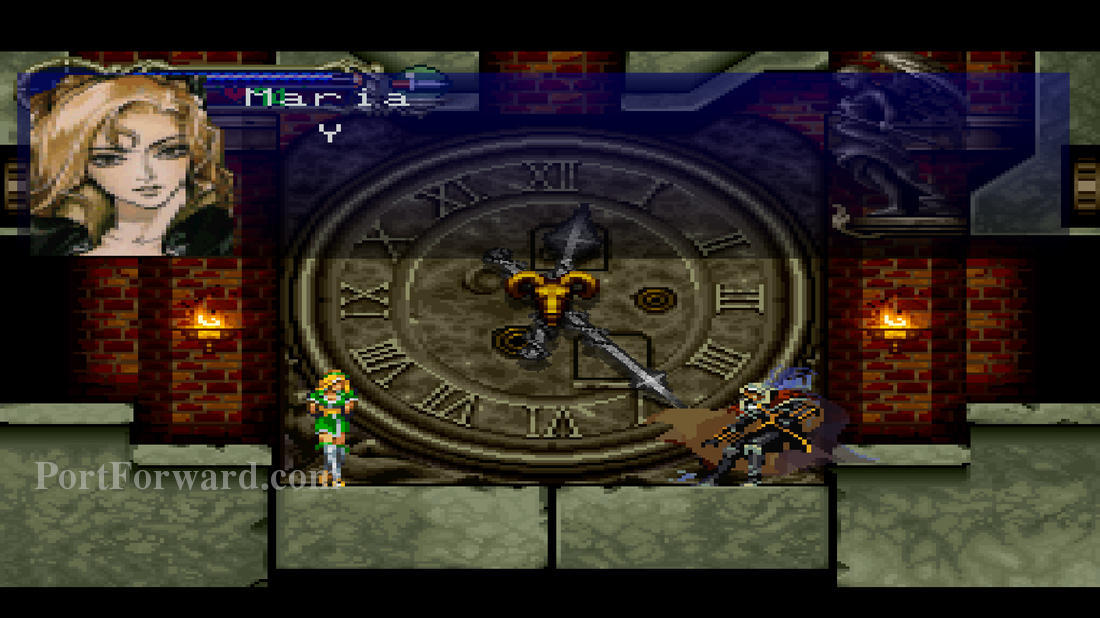
The hollower something is, the louder it sounds when it falls.
Behind that sound, another overlapped.
The sound of the same sword being drawn at the same angle.
This time, Alucard ran toward the end of the gallery. His cloak stretched long behind him. He crossed the steps two at a time and turned by gripping the railing. The figure in the dark vanished once more between the pillars. It was not fleeing. It was showing him a path. The movement was too exact to be natural. It stayed only as far ahead as Alucard could follow. When he stopped, it stopped.
The castle used roads even when calling prey.
He followed.
At the end of the passage, outside air entered. The scent of marble suddenly thinned, and the cold of night seeped through the stone walls. Once he crossed the threshold, the outer wall appeared.
The wind struck his face first.
The Outer Wall was a vertical road raised upon the night. If the inner gallery was a horizontal maze, this place divided upward and downward. To the left, the black body of the castle continued without end. To the right, there was open air. Looking down, he could not see the forest. Darkness came first, and somewhere within that darkness the forest must have been waiting. Torn flags clung to the wall, and old traces of rain remained on the ruined stone parapets.
Here, the wind moved in place of music. The higher he climbed, the thinner its note became. The farther he descended, the more its low resonance disappeared into the wall. Alucard held his cloak with one hand. The red cloth taken in the laboratory fluttered far more restlessly here than before. Enemies outside rode the wind before they rode sound.
A bowstring drew tight above the stone steps.
He lowered his body. A bone arrow passed over his head and vanished beyond the wall. The skeleton archer sat on the parapet. Its fleshless fingers drew a second arrow.
Alucard did not climb the stairs directly. He leapt toward the left wall, then used his second jump to reach the height of the parapet. By the time the archer aimed downward, he was already beside it. The point of his sword severed the neck bone. The skeleton fell into open air with its bow.
No sound of impact came.
Before he landed, a yellow Medusa head came gliding on the wind.
Its serpent hair rippled like waves, and its eyes were small and bright. Its movement was curved. If one evaded in a straight line, it would follow. Alucard did not stop; he stepped down half a pace. The Medusa head passed the height where he had been and bent as though about to strike the wall. He waited for the returning curve and struck it with the back of his sword. The head burst, scattering yellow light.
Beneath that light, a blue Medusa head rose next.
Even on the outer wall, the castle loved repetition. Reading one did not end the matter. The second came at a slightly different height. The third came after the wind changed direction. Alucard climbed the stairs slowly. He did not run. The moment one runs, one loses the curve. He placed one foot after another, held his sword low, and walked between the waves drawn by the heads.
In the upper passage stood an armored knight.
Armor Lord was a fitting name for its size. The long sword in both its hands was as tall as a man, and its shoulders were broad as a doorway. The knight did not move. When Alucard came within three steps, the swordpoint scraped the floor.
The first attack was wide.
Alucard withdrew and watched the end of the blade. With large weapons, the end is more dangerous than the beginning. The tip that follows late after the swing rules space for one more beat. He waited until that tip passed, then entered. His short sword struck the armor’s side.
A low resonance returned.
The sensation of the newly gained orb came back through his wrist. Hollow, but not completely empty. Something inside the armor held the sword.
The knight swung a second time. This one came from above. Alucard moved aside and stepped one stair lower. The great blade struck stone and threw sparks. In that instant, he hurled the hand axe. The axe did not hit the helm. Instead, it lodged in the shoulder ornament and disturbed the balance slightly.
That small tilt was enough.
Alucard stepped upward and thrust. Black smoke leaked from inside the armor. The knight dropped its sword and collapsed.
As he lowered himself to recover the axe, footsteps sounded above.
This time, they did not hide.
The same footsteps. Yet heard here on the stone stairs of the outer wall, they were more ominous. Not a reflection on marble, but feet with actual weight. Alucard slowly raised his head.
The upper door stood open.
Inside it, a faint color wavered. Too murky to be called iridescence; more like light turning inside a membrane. No one stood before it. But the dust on the floor had been pushed away in two lines. Someone had been standing there only moments ago and had entered.
Before going through the door, Alucard checked the nearby chamber of red light. The light floated quietly. He rested within it for a short moment. Fatigue lowered, and the wound on his shoulder closed a little more. But the tension inside him did not loosen. The silence of a resting room does not erase battle. It merely gives its outline sharper form.
He stepped out again.
Beyond the door lay a long chamber. A battle room hidden inside the outer wall. The ceiling was not high, but the room was wide enough from side to side. In the center of the wall was set a great circular emblem. A stone disk resembling the sun. Its center was neither human face nor beast face, yet it gleamed as though revolving. Around the disk, toothlike carvings interlocked, and between them seeped a little darkness shot through with many colors.
The floor was strangely clean.
Places where battles occur are often like this. Before blood touches them, the castle clears the space.
Alucard walked to the center of the room.
The circular emblem turned.
The first thing to emerge was a hand. The same length as his, the same pallor, the same lean lines of the fingers. Then arm, shoulder, cloak, face. What came out of the emblem did not resemble liquid taking human form. It was more as though a completed shape were being pushed through the door.
It was Alucard.
No.
It was Alucard’s outline.
The same hair touched its shoulders, and the same cloak flowed behind it. The line of the face was the same as well.
But the eyes were not.
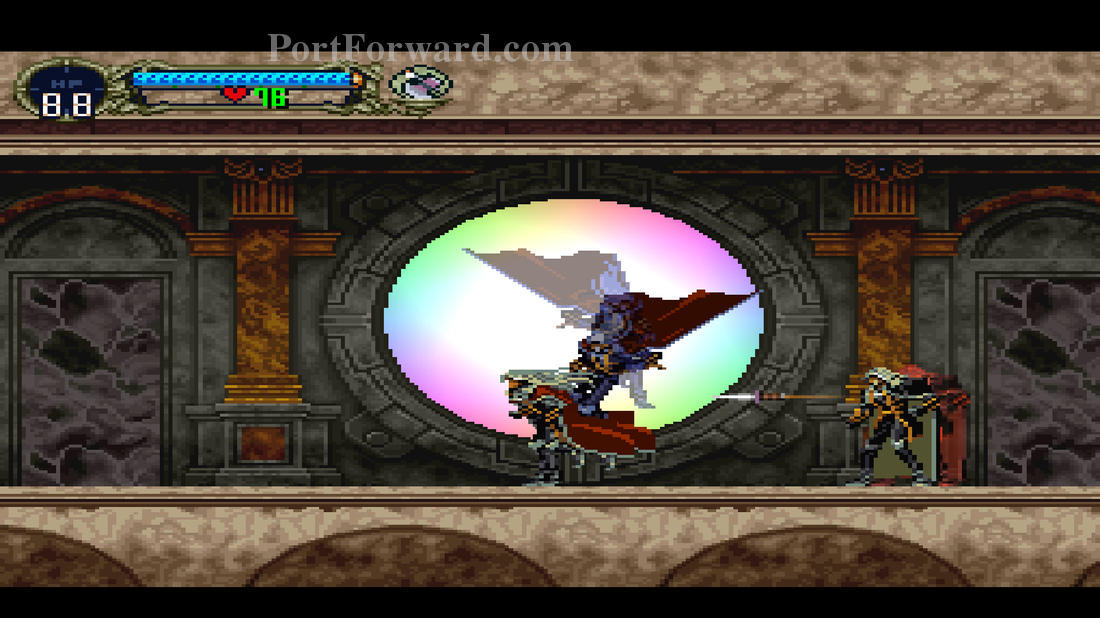
There was no memory in them. Those who survive too long acquire fatigue before anything else in their eyes. This thing’s eyes had no fatigue. No wounds. No hesitation.
The doppelganger tilted its head.
It was a movement Alucard had not made.
That small difference was the signal of encounter.
The doppelganger charged first. There was no time spent measuring distance. Its short sword came low, then cut upward toward his chest. Alucard received it head-on. Sword struck sword. Even the sound resembled his own. But the distribution of force was different. The doppelganger’s wrist moved too cleanly. It did not make the slight adjustment needed to spare an injured shoulder.
That made it faster.
Alucard tried to deflect the second attack.
A mistake.
Instead of withdrawing its sword, the doppelganger raised its left hand and threw a dagger. A small silver flash flew low. Alucard turned too late. The dagger grazed the side of his thigh and buried itself in the wall. A thin pain rose after the strike.
This thing was not merely copying his present self.
It seemed to have taken even the possibilities he had lost. Powers not yet in his hands, transformations his body had not yet learned, things hidden inside the shadow of the name Alucard. The castle knew them.
The doppelganger leapt again.
The angle of the jump was familiar. Yet when its body bent in the air, its cloak spread like wings. For an instant, the shape of a bat overlapped it. The doppelganger drove down diagonally. Alucard stepped back, his toes scraping the floor. The winglike impact passed before his face, and then the sword stabbed downward. Cracks spread through the stone.
The doppelganger withdrew the moment it landed.
Even that retreat was Alucard’s. Half a step beyond the enemy’s reach, wrist lowered to hide the next cut. Seeing one’s own habit move in another body was more unpleasant than any mirror. A mirror, at least, remained trapped in its surface. This breathed.
Alucard lowered the point of his sword.
The doppelganger lowered its own.
He stepped forward. The doppelganger stepped forward. The distance between them did not change. The sunlike emblem at the center of the room turned slowly, and the light from the wall stained both heads of hair the same color. Whichever moved first, the other would follow the same path.
Alucard drew the hand axe.
The doppelganger drew a dagger.
Alucard threw. The doppelganger threw as well. Axe and dagger crossed in the air. Alucard lowered his head, and the dagger cut several strands of his hair. The axe grazed the doppelganger’s shoulder. An echo returned through his wrist.
Not deep.
But not empty.
A body that could be wounded. Then it could fall.
The doppelganger looked once at the wounded shoulder.
For the first time, its reaction was late.
The delay did not come from pain. It was a pause to understand damage. Alucard entered in that instant. His short sword thrust toward the chest. The doppelganger barely turned aside, but the swordpoint tore beneath its cloak. A piece of black cloth fell. The moment it touched the floor, it melted like water.
But the doppelganger did not miss the opening. When Alucard’s arm extended, it lowered its body and slipped inside. The same method. At too close a distance, the short sword cut across his side. A gap the cuirass could not protect.
Alucard breathed out sharply and stepped back.
Blood moved down beneath his fingers.
The doppelganger did not bleed. Only a little black mist leaked from the shoulder wound. But the mist quickly closed like skin. It was not healing so much as the form refusing to remember injury.
Alucard did not press his side. To block it with his hand would be to lose that hand. Instead, he changed his stance. Right foot half a step back, left shoulder low. A posture that hid the wounded side.
The doppelganger copied that too.
Then Alucard saw, for the first time, what it did not know.
It copied.
But it did not know why he stood that way.
For Alucard, wounded in the side, that stance was defense. For the unwounded doppelganger, it was meaningless imitation. So its balance slipped. The left shoulder had lowered, but no weight had shifted properly to the right foot. The waist was too straight. The eyes looked too far forward.
Alucard did not enter immediately. A discovery seized too quickly becomes a trap. He retreated two steps. The doppelganger followed at the same interval. Their swords struck. Once. Twice.
On the third, the doppelganger suddenly scattered into mist.
His sword cut empty air.
A cold presence slid behind him. Alucard turned. The mist regained human shape at his back. The sword came down. He could not avoid it completely. The blade grazed across his shoulder. The wound from the laboratory opened again.
The doppelganger followed by folding like a bat and slamming forward. Wing Smash. Its winglike cloak became a hardened blow and drove into him from the side. Alucard raised his arm to block, but the impact pushed his whole body. His feet left the floor, and he was thrown toward the wall. Stone received his shoulder. His breath stopped for an instant.
The doppelganger did not wait.
It jumped into the air and cut downward. The first strike aimed for his head. Alucard rolled aside. The second came at his waist the moment it landed. He caught it with his sword. The third anticipated that guard and arrived later. His arm was forced back. The blade’s tip grazed his cheek. Blood flowed in a thin line.
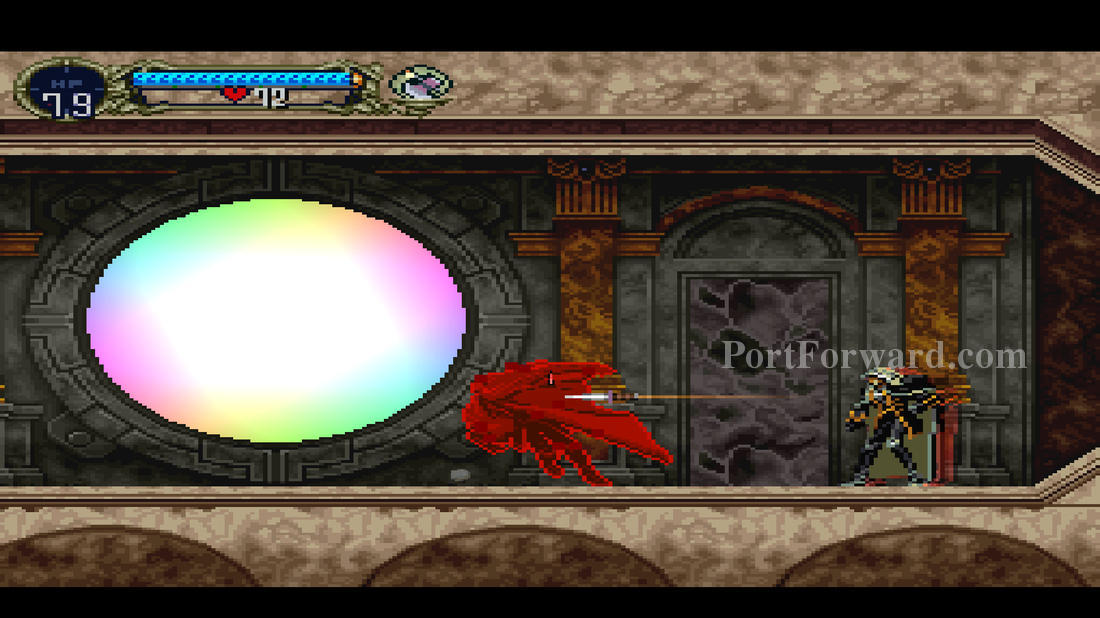
The doppelganger’s repetition was exact.
Too exact.
A living body changes little by little as battle continues. Breath shakes. Ankles slow. Pain narrows choice. The doppelganger continued to leap at the same angle even after being wounded. It threw daggers from the same distance and cut downward from the same height. At first, that was frightening.
Now, a path was visible.
The line of imitation had been drawn across the floor.
Alucard let his sword hang low.
It was not acting tired. He was tired. His breath was heavy, and his side burned. He did not hide that fatigue. Instead, he made it clearer. He let his shoulder drop slightly and relaxed his right hand a little. The swordpoint lowered toward the floor.
The doppelganger lowered its swordpoint too.
But there was no fatigue in that hand. So it became too loose.
Without raising his eyes, Alucard moved only his foot. In the floor’s reflection, he watched the doppelganger’s knee. It expected him to cut upward. The Alucard of the past might have done so. Hide the wound, rise from a low posture, and end it at once. The castle had stolen that habit.
He did the opposite.
He loosened his wrist as though abandoning the sword.
The doppelganger’s eyes followed the swordpoint down for a fraction of a moment. In that instant, Alucard seized his cloak with his left hand and threw it forward. The red cloth spread like blood. The doppelganger cut through it. While the blade parted the fabric, Alucard did not lift his sword. He lowered it farther.
Ankle.
Knee.
Thigh.
Things that take human shape guard late against low wounds.
The blade cut the doppelganger’s leg.
This time, the strike was deep. The echo that returned through his wrist was different. Not the outer shell, but a fracture leading inward. The doppelganger lost its stance for the first time. Its body tried to scatter into mist, but the wound in the leg held its form in place. Black mist curled upward from below, then hardened again like flesh.
Alucard did not miss the opening.
He advanced. The doppelganger threw a dagger. Alucard did not evade; he caught it in the torn edge of his cloak. The dagger lost direction in the cloth. He drove forward as though stepping onto the doppelganger’s wrist. The two swords met at close range. Sparks flew. The same face stood directly before him.
The eyes were still empty.
Alucard looked into them and drew a very low breath. He did not speak. That thing had no ears to hear words. Even if he called a name, there was no soul to answer. It looked like a fight against himself, but in truth he was fighting an organ of the castle wearing the shell of his own shape.
He held to that fact.
Only then would his sword not waver.
The doppelganger suddenly opened its mouth.
No sound came. Instead, its body was soaked in red light. The iridescence within the emblem flowed into its back. The wounded leg trembled briefly, then became smooth again. Not fully healed. But filled enough to move.
A change.
Now it was not merely copying. It copied, then forced the portions that had gone wrong back into place.
The doppelganger became mist.
This time, it did not move behind him. It slid beneath his feet. Low mist skimmed across the stone floor and passed as though wrapping around his shadow. Alucard escaped upward with a second jump. But the doppelganger had already followed in the shape of a bat. Its wings folded, and its body struck from the side. He raised the sword in the air to receive the impact. His arm went numb. His body spun as it fell.
Just before landing, he touched the floor with his fingertips.
He did not fall.
Nor did he spend all his strength merely not falling. From that same posture, he lowered his body. The doppelganger was already descending from above. A downward slash. Same angle. Same speed.
This time, Alucard did not evade.
He stepped half a pace inside the falling line of the blade. The dangerous part of a sword is the tip. Near the hilt, it is narrow and dull.
The doppelganger’s sword grazed behind his shoulder. Alucard’s blade entered beneath its chest.
The distance was short. The cut was not deep.
So he pushed with his body.
Their shoulders collided. The same face contorted. Alucard gripped the hilt with both hands and twisted right. The wound split. From inside the doppelganger came a sound like breaking glass. It tried to retreat. Alucard followed. Without pulling the sword free, he drove one step farther.
The circular emblem was behind it.
The doppelganger was being pushed toward it. Now it knew. For the first time, the direction of its resistance changed. Its left hand seized Alucard’s wrist, and its right-hand sword tried to stab his side. Alucard did not pull his wrist away. Instead, he lowered his head by a fraction. The blade passed over it. At a distance close enough for their foreheads almost to touch, he kicked the doppelganger’s knee.
The wounded leg.
The doppelganger collapsed.
Alucard drew his sword free. Black mist poured from the wound. He cut once more. This time, the neck. But the head did not fall. The form blurred and escaped the blade. The doppelganger rolled back and stood before the emblem.
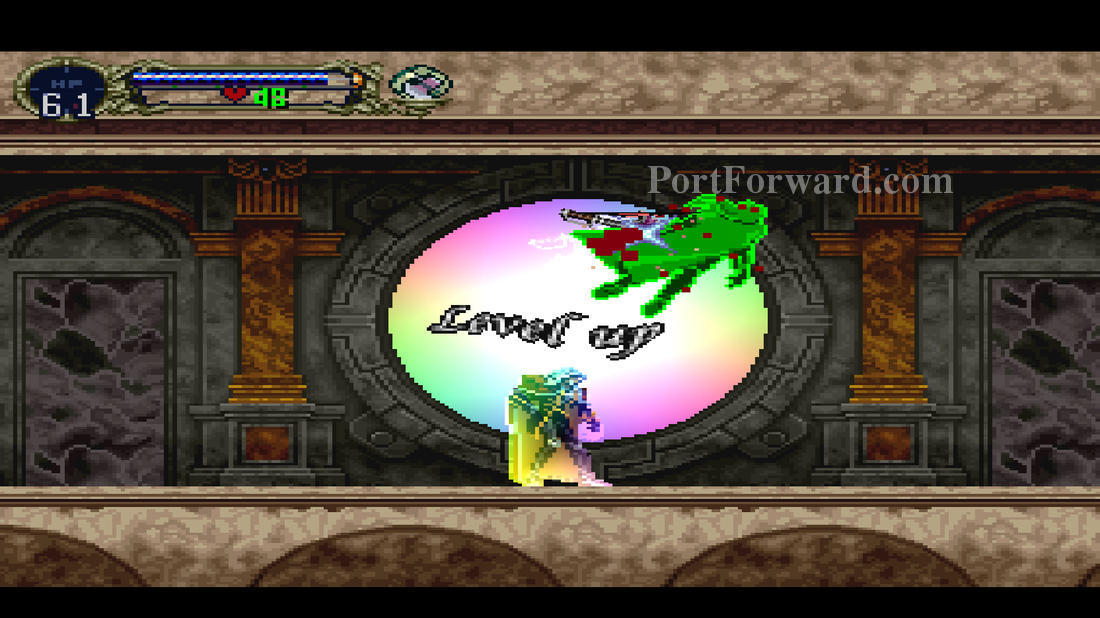
Its body changed rapidly.
Mist, bat, man. Mist again. Man again. Forms pressed into each other and overlapped. The imitation was breaking. A bat’s wings clung to a human face, and the cloak stuck to the skin before peeling away. For the first time, something like fear trembled inside its eyes. But even that emotion was shallow, as though borrowed.
Alucard approached.
The doppelganger threw its final dagger. He knocked it away with his sword. The dagger buried itself in the rim of the circular emblem. The emblem shook violently.
The doppelganger charged. Its sword rose high. The posture was almost the same as its first attack when they had met. A cut from above to below, meant to divide the chest.
Alucard did not evade left.
He did not evade right.
He stepped forward and placed himself inside the enemy’s arm. Before the sword fully descended, he pushed beneath the elbow with his left hand. The doppelganger’s blade missed its line. At the same time, Alucard’s sword rose from below. From chest to shoulder, a line cut through the center of the shadow.
This time, no echo returned.
After the blade passed through its center, the doppelganger’s body rang like an empty bell.
It staggered backward. Its back touched the circular emblem. The light within the emblem suddenly grew strong. The doppelganger began to be pulled back in, the reverse of how it had first emerged. Its fingertips collapsed first, and the cloak was drawn inside like mist. The face remained last.
A face like Alucard’s.
But now only the fact of resemblance remained.
Its lips moved.
No sound came.
Alucard did not answer.
The doppelganger’s face folded into the emblem. The circular stone disk trembled once, then closed its light. What remained in the room was a torn piece of red cloth, a broken dagger, and Alucard’s own breathing.
For a while, he did not move.
After battle, the castle often let the next sound be heard immediately. This time, the silence lasted. Perhaps because the footsteps identical to his own had vanished, the entire room seemed emptier. Alucard looked down at his sword. Black mist and red blood clung together on the blade. At a glance, it was difficult to tell which belonged to him.
He cut away the torn edge of his cloak.
The cloth fell to the floor.
It did not melt.
Because it was his.
A white light rose at the center of the room. It resembled the light he had seen in the laboratory, though this one was colder. Alucard reached out. When it entered his body, the depth of his lungs widened again. The pain in his side eased, and the beating of his heart settled.
The castle’s rewards were always indifferent. They did not ask whom he had defeated. They kept him alive only enough to enter the next room.
The door on the right opened.
Beyond it, in a small chamber, lay a sword. It was longer and straighter than the short blade he had been using. It bore almost no decoration. A simple weapon, fit for the hand of an ancient soldier. Alucard lifted it. Its weight settled into his wrist. It was not light. Nor was it dull. The length of the blade reached exactly the distance he had felt lacking in the battle just past.
He set the new sword at his side.
He did not discard the old one. Inside this castle, even a short blade might one day become the key to a door. He compared the weight of the two swords for a moment, then held the longer one in his right hand. The angle of his wrist changed. His steps would change as well.
If someone stole his shape again, at least it would not be able to steal the same Alucard as before.
A small light awakened from an urn high above the room. He reached it with a second jump. The urn shattered, and the light entered his palm. The space around his heart tightened briefly, then released. A body that could endure longer. Breath that could reach deeper rooms. The castle placed its paths far away and widened the body little by little only for those who survived.
Alucard returned to the outer wall.
The wind remained cold. Below, Medusa heads drifted in slow curves, and above, an iron lift stood motionless. A mechanism not yet moving. A switch not yet reached. A road still demanding another form. He took them into his eyes, then passed on.
The higher he climbed, the narrower the stone stairs became. From within the wall, the smell of paper began to seep out. At first it was thin enough to seem imagined. But after one more stair, it became certain. Dust, leather bindings, old dry ink. A smell that did not vanish even in the wind. Different from the perfume of marble or the oil of the laboratory. The smell of an older silence.
Long Library.
The door was not closed. A low light leaked from within. A place where bookshelves stood higher than walls. Where paper swallowed sound, and an old hand counted prices over an ancient ledger.
Alucard stopped before the threshold.
The footsteps left by the doppelganger still remained inside his ears. Same height, same stride, same sword.
He quietly gripped the hilt of his new blade.
From the darkness within, a bookshelf moved by itself.
Then came a very low cough.
It sounded like a human cough. But inside the castle, it was dangerous to believe a human sound belonged to a human being.
Alucard stepped through the door.
The smell of paper swallowed him.
댓글
댓글 쓰기