[Chrono Trigger Game Story] How Time Taught the World to Remember
What to Notice Before the Time Travel
When people talk about this game, they usually begin with time travel, the “Dream Team,” and Yasunori Mitsuda’s music. None of that is wrong. Look at it from a slightly different angle, however, and the real distinction of Chrono Trigger lies in something else: the feeling that its world remembers what the player has done.
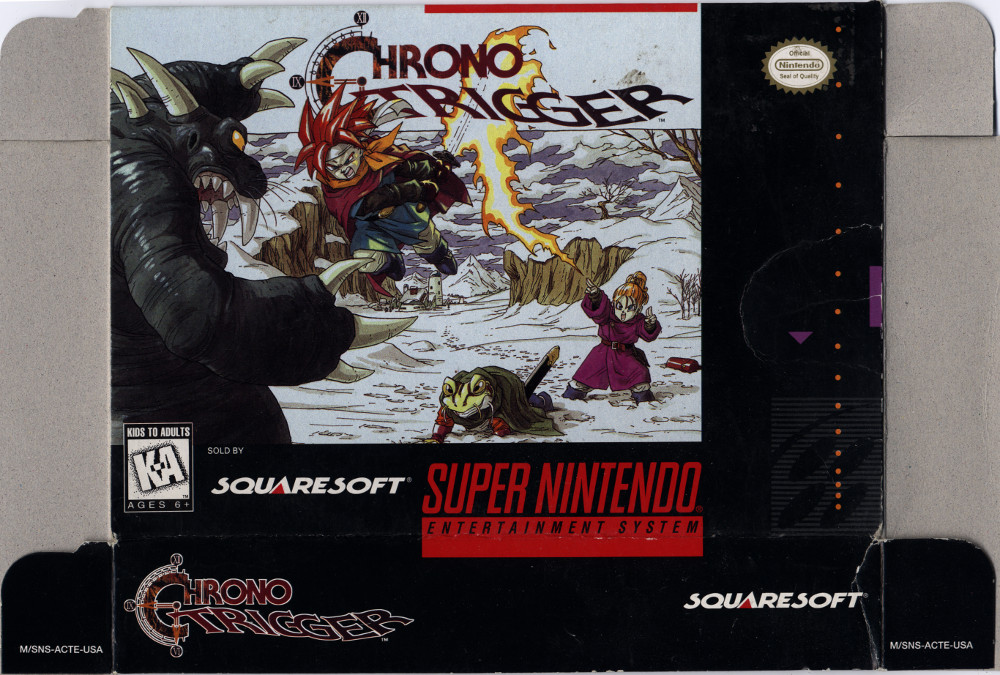
That feeling does not come merely from being able to move between eras. A choice made in the past survives in a landscape centuries later. A thoughtless act at a festival returns as testimony in a courtroom. Time ceases to be background lore and begins to feel like a place—somewhere the player can touch, enter, and alter.
The game starts building this sensation quietly at the Millennial Fair in 1000 A.D. Crono explores the festivities, collides with Marle, and eventually stands before Lucca’s Telepod. At first, everything is bright and carefree. Popping balloons, watching a race, or returning a lost cat to its owner appears to have nothing to do with the fate of the world.
But the game does not discard those small actions. When Crono is put on trial soon afterward, what he did at the fair becomes evidence used to judge his character. Only then does an unusual tension settle over the player: in this world, the past does not simply pass away.
Why the Eras Never Feel Like Stages
In many games about time travel, each era is a stage designed to provide a new landscape and new enemies. The Middle Ages end, the future begins; the future ends, and prehistory takes its place. On the surface, Chrono Trigger follows a similar pattern. Yet its eras do not feel like isolated levels. They feel like the same world subjected to different pressures of time.
In 1000 A.D., there is the warmth of everyday life and a festival in full swing. In 600 A.D., the same kingdom is mired in war and loss. By 2300 A.D., the traces of a familiar civilization have become ruins and hunger. In 65,000,000 B.C., humans and Reptites struggle for survival, while the Kingdom of Zeal in 12,000 B.C. holds beauty and the signs of catastrophe in the same suspended moment.
Every era has its own colors, music, architecture, and manner of speech, yet none feels like an entirely separate world. Traces seen in one age reappear in another.
The distinction becomes even clearer after the player changes the past. Help restore a barren land, then travel forward by centuries, and a forest stands there. Leave an object long ago where light can reach it, and it emerges from the passage of time with a different power. Restore a ruined place, and its later form changes as well.
The game does not summarize these changes in lengthy explanations. It asks the player to walk through the same places again—to see where trees have grown, hear how people now speak, and discover newly opened paths. Cause and effect therefore remain not as information in a story, but as something with the texture of a place.
The Past We Can Repair, and the Time We Must Accept
What makes this especially interesting is that the game does not allow every past to be rewritten at will. Some wrongs can be undone. Other losses have already passed through the lives of too many people. Even when a chance to reverse them appears, it may slip away if no one recognizes it or reaches for it in time.
That is why time travel in Chrono Trigger never feels entirely weightless. A Gate is a convenient means of travel, but it is also a device that keeps asking what can be repaired and what must be accepted.
The past in this game is not merely a place visited to solve a problem. For one person, it is the moment where guilt took root. For another, it is a memory that makes abandoning revenge impossible. For someone else, it is actual time that must be endured alone for centuries.
As the scale of the time travel grows, the story paradoxically becomes more personal. It is an adventure to prevent the end of the world, but it is also a story about people beginning to move again after being stranded in their own halted time.
Companions Stranded in Different Times
The companions first appear to serve as guides to their respective eras. Look more closely, however, and each of them is trapped in a different kind of time.
Marle is torn between the long history of the royal family and the life she wants to live now. Lucca may be an inventor facing the future, but part of her heart remains in a past she could not repair. Frog cannot easily escape the moment when he lost his friend.
Robo can endure, through labor and waiting, a span that for humans would amount to history itself. Ayla chooses the living present even beneath the signs of extinction. Magus, striving to recover a person and a world taken from him long ago, becomes imprisoned by revenge itself.
That is why the companions are remembered as more than collections of classes and attributes. Behind the functional labels—a swordsman, a princess who heals, a powerful machine—lies the time each character has had to endure. One wants to change the past. Another must accept it before moving forward. Still another knows the future has already been destroyed and chooses to fight for it anyway.
Crono’s silence suits this structure. He does not explain his feelings at length. When danger appears, he steps forward first. When someone vanishes beyond a Gate, he follows.
His lack of dialogue can make him seem empty at first, but in truth his choices speak in his place. What Crono said at the decisive moment matters less than where he stood and what he did before anyone else.
How Combat Keeps the Adventure Moving
Combat, too, is designed so that it does not separate itself from the story. In role-playing games of the period, it was common to walk across a field until the screen suddenly changed and a random battle began. In Chrono Trigger, enemies exist on the field, and many battles unfold exactly where the party encounters them.
An enemy leaps from the undergrowth. A monster blocking the path begins to move. Travelers passing through are suddenly surrounded. The world does not disappear merely because combat has begun.
The developers explained that they created more than a hundred of these battle-introduction scenes by hand. They wanted to show not only how enemies appeared, but also what those enemies had been doing before the fight. As a result, even repeated enemy types often avoid feeling like mere repetitions.
Sometimes the player can slip past an enemy. Sometimes it is possible to watch its movements before choosing to engage. Combat becomes less a procedure interrupting travel and more an incident arising in the midst of exploration. 1994–1995 developer interviews
The positions of enemies and companions matter as well. With techniques that cut through enemies in a line or strike a certain area, where an ability is used becomes as important as which target is selected. Waiting for enemies to scatter or cluster makes the arrangement of the field part of the battle itself.
How Combination Techniques Reveal Relationships
The game’s Double and Triple Techs express the same character. Putting two heroes in the same party does more than add their statistics together. Crono launches an enemy with his blade and a companion layers an attack into the same instant; Lucca’s flame and Robo’s body become parts of a single technique.
Because the individual movements visibly interlock on screen, the idea of “fighting together” becomes an action the player can actually see.
The developers said that combination techniques grew from a simple thought: once each character’s animations looked good on their own, it would be even more entertaining to make the characters move at the same time. An idea for the combat system thus became a way to dramatize the relationships among companions. 1995 developer interview
What matters is that these techniques are not memorable solely because they are always the most efficient attacks. The expression of a battle changes according to the combination the player chooses.
Place Crono beside Frog, and sword meets sword. Bring Marle and Lucca, and the timing between two childhood friends becomes visible. Choosing a party is a calculation about strength, but it is also a decision about which relationships to put on the screen.
How Music Gives Each Era Its Air
Music binds all these times into a single memory. The Middle Ages carry the loneliness of wind crossing an ancient field. Prehistory strikes the body first with raw vitality. The music of the ruined future opens into a vast emptiness, while the Kingdom of Zeal is so beautiful that its beauty itself suggests it cannot endure.
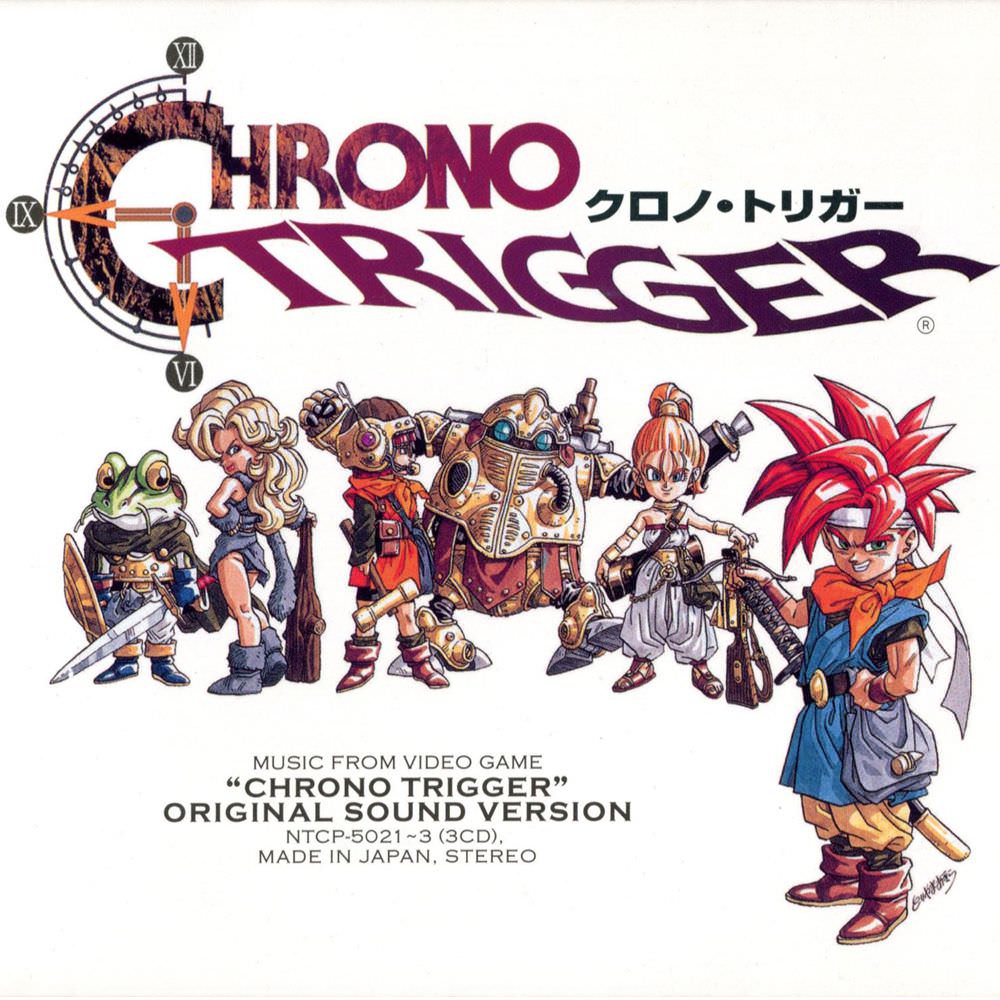
The music alone can tell the player which era they have entered, even before a date appears on screen.
In an interview from the period, Yasunori Mitsuda said the capacity of the 32-megabit cartridge allowed the team to include sixty-eight tracks, and that matching the music to battle effects and character movement was equally important. He understood “tears” as the emotional center of the work and focused less on making the score ostentatious than on leaving timbre and texture in the listener’s heart. Interview material featuring Yasunori Mitsuda
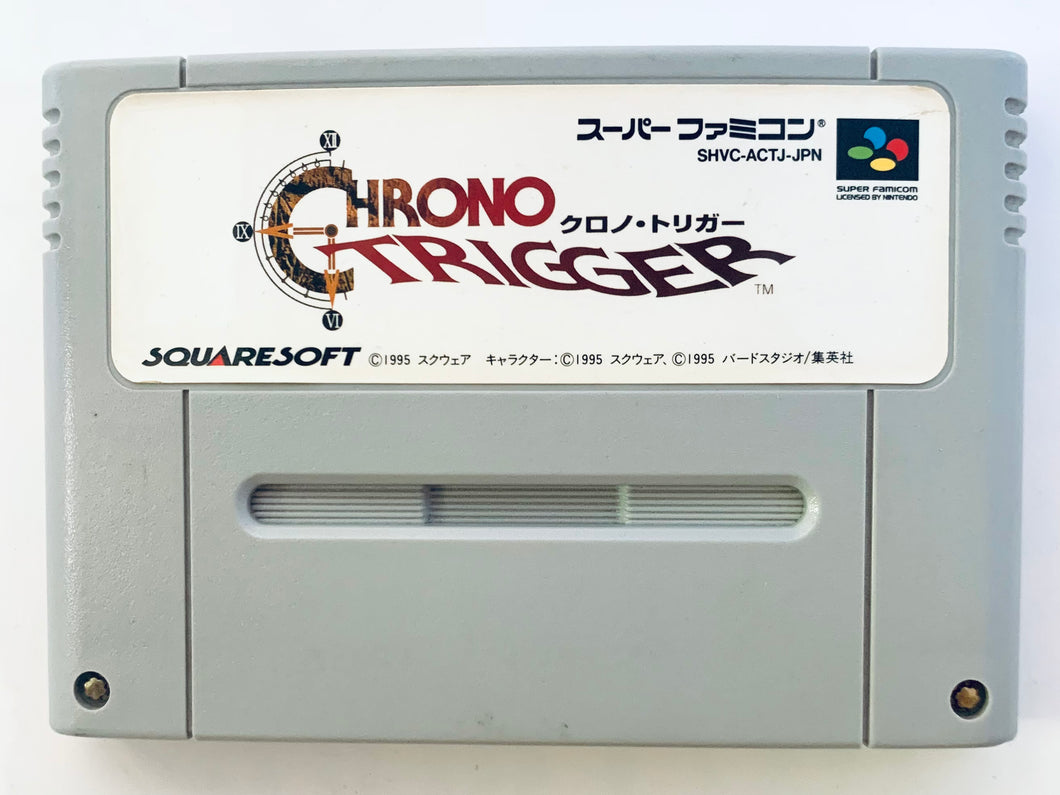
In practice, the music of Chrono Trigger does not reserve sorrow for explicitly sad scenes. Even the joyful Millennial Fair carries the feeling of a night that will eventually end. Even its grandest themes contain a trace of longing for time already gone.
Rather than explain how an event should feel, the music seems to tell us in advance what kind of memory that event will one day become.
What Stood Behind the Name “Dream Team”
The collaboration of Hironobu Sakaguchi, Yuji Horii, and Akira Toriyama was undeniably special. But the game was not completed by the renown of those three people alone. For more than two years, a team of roughly fifty—including Takashi Tokita, Yoshinori Kitase, Masato Kato, Yasunori Mitsuda, and many others responsible for scenario, combat, and graphics—worked to shape the finished game.
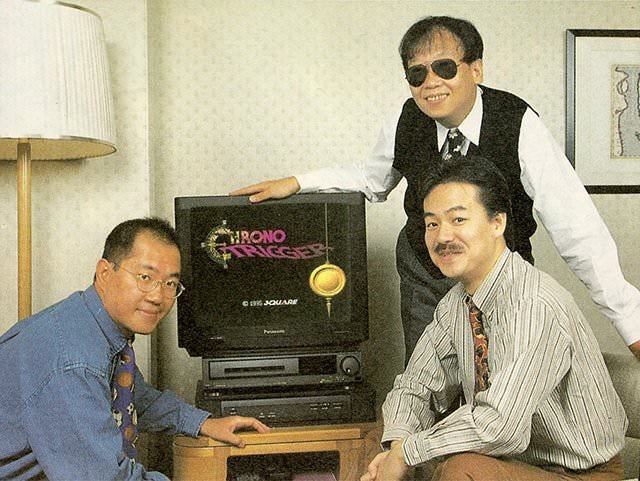
Toriyama’s characters and the atmosphere of his world became starting points for imagining the scenarios and backgrounds. Horii refined even the brief dialogue of villagers to bring out their personalities, while Sakaguchi remained involved on the floor with events and battle values. These different creative philosophies did not merely appear side by side in the credits. They continually collided and adjusted to one another throughout production. Interview on the development of Chrono Trigger
That is why the finished work never feels like half Dragon Quest and half Final Fantasy. An accessible, welcoming adventure, dramatic scene direction, and Toriyama’s distinctively bright vitality achieve a new balance without overpowering one another.
The story concerns the destruction of the world, yet the whole game never sinks into darkness. Its abundant humor does not lessen the weight of loss. A joyous fair and a ruined future, ridiculous monsters and ancient guilt—all flow naturally through a single work.
A Design Built as Much by Removing as by Adding
That balance also bears the marks of ruthless subtraction. The developers recalled that they would first implement an idea and then remove it if it was not enjoyable. Keeping something merely because it appeared in the design document, they felt, could amount to little more than the creators indulging themselves.
The progression of Chrono Trigger feels unusually smooth not because the game lacks content, but because the intervals between travel, combat, and event have been carefully shortened. The player is rarely asked to endure a tedious stretch simply to reach the next memorable scene.
When the task in one era is complete, the story does not linger too long before moving to the next. Ordinary battles appear only as often as they need to, and a dungeon ends once it has fulfilled its role. New companions, places, and events arrive quickly, yet the larger story never scatters into disorder.
Every element faces the same direction: crossing time to discover the causes that shaped the world.
New Game Plus as Another Form of Time Travel
New Game Plus and the multiple endings rest on the same principle. A player who has finished the story knows the future and returns to the past. Beginning again with greater strength, the player can challenge the final enemy at a different point in the story, and the chosen moment leads to a different ending.
A second playthrough is therefore not a simple repetition of the same story. It becomes another journey through time, undertaken by someone who has already seen the future.
In an ordinary replay system, only a character’s abilities and equipment carry over. In Chrono Trigger, the player’s memory becomes part of the system. Knowing what lies where, who will appear, and what fate awaits the world, the player returns to the Millennial Fair where everything began.
The experience of finishing the game does not remain information outside the story. It is transformed into the sensibility of someone who has turned back time. Game Informer’s retrospective on the Super Nintendo
Why It Still Does Not Feel Like a Game from the Past
Some aspects do look simple today. Combat is generally forgiving, and the laws of time travel are not always explained with absolute rigor. A few companions might have benefited from longer stories. The additional content in later editions can also feel less naturally integrated than the original adventure.
Yet these limitations barely disturb the game’s center, because what the work wants to say and what it asks the player to do remain in harmony.
Change the past, and the future landscape changes. Keep companions beside you, and new techniques become possible. A casual action returns, after time has passed, as testimony. To recover someone who has been lost, you must go yourself to the moment when that person still existed.
First released on March 11, 1995, Chrono Trigger reached its thirtieth anniversary in 2025. According to Square Enix, worldwide shipments and downloads have surpassed five million copies. Square Enix’s official thirtieth-anniversary feature
Graphics and nostalgia alone cannot explain why an old role-playing game continues to be introduced to new players. At the heart of Chrono Trigger is a faith that the world does not forget what the player has done: every small choice leaves a trace somewhere, and an action in one age reaches a person in another.
The player does not merely observe time. They cross it, change it, and return to the place where the consequences are waiting. That may be why Chrono Trigger still does not feel like a game that belongs to the past.
References
- https://shmuplations.com/chronotrigger/
- https://shmuplations.com/chronotrigger2/
- https://gameinformer.com/classic/2019/10/25/super-powered-charting-the-lasting-legacy-of-the-super-nes
- https://www.jp.square-enix.com/topics/detail/3459/
- https://snescentral.com/article.php?id=0282
- https://www.procyon-studio.co.jp/library/detail/001.html
- https://cuchiwaii.com/products/chrono-trigger-super-famicom-sfc-nintendo-japan-ver-ntsc-jp-cart-shvc-actj-jpn
- https://www.rpgsite.net/news/15584-dragon-ball-dragon-quest-chrono-trigger-legend-akira-toriyama-dies-at-68
댓글
댓글 쓰기